
The Women Who Built Sutton Square: How Gilded Age Rebels Colonized Manhattan’s Waterfront
In 1920, the eastern bluffs of 58th Street were among the least fashionable corners of Manhattan. Dominated by coal yards, tenement blocks, and the sprawling Peter Doelger Brewery, the East River waterfront was widely regarded as an industrial wasteland avoided by polite society.
That all changed when a coalition of independent, visionary women launched what the press called an "audacious social experiment".
Tired of the rigid architectural conventions and encroaching commercialism of Fifth Avenue, reform-minded widow Anne Harriman Vanderbilt shocked high society by purchasing land on the neglected riverfront. Commissioning architect Mott B. Schmidt to erect a grand neo-Georgian residence at 1 Sutton Place, she effectively anchored a new residential enclave.
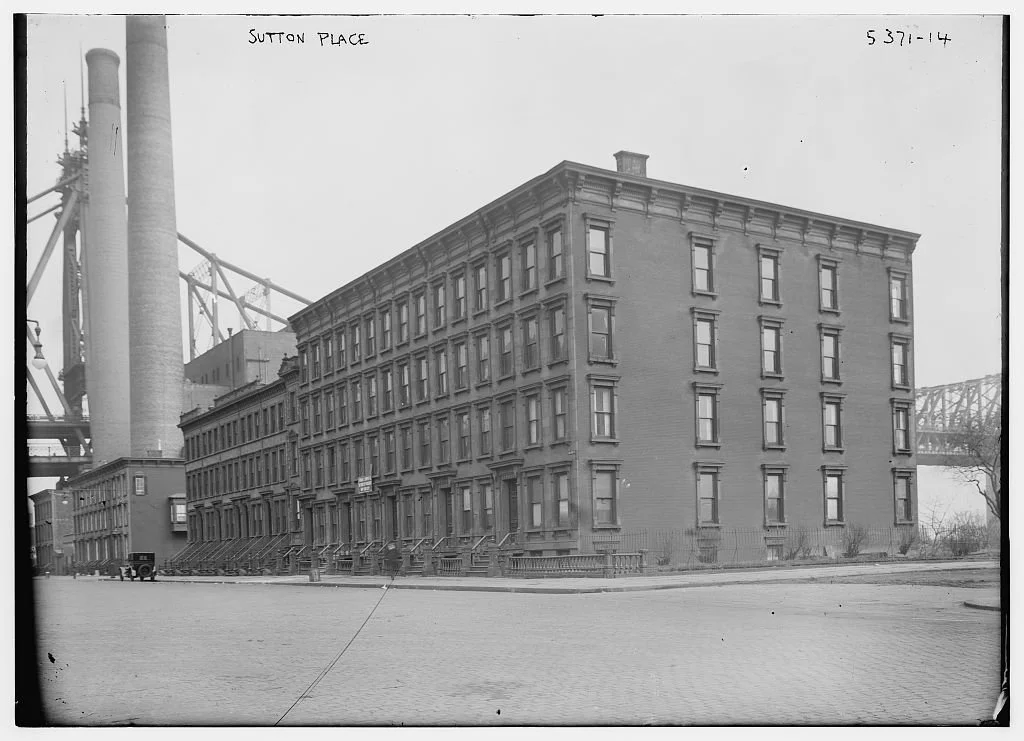
Directly adjacent, her close friend Anne Tracy Morgan—the decorated transatlantic humanitarian and daughter of J. Pierpont Morgan—built a colonial-style town mansion at 3 Sutton Place, later gifted to become the official residence of the United Nations Secretary-General. Around the bend at 13 Sutton Place, theatrical powerhouse Elisabeth Marbury and her partner, pioneering interior decorator Elsie de Wolfe, transformed a brownstone into a salon of modern taste, tossing out dark Victorian velvet in favor of airy French furnishings and river vistas.

Together with fellow urban pioneers, they established Sutton Square. Under strict deed covenants, the existing Victorian rowhouses were shorn of their high stoops and heavy cornices, replaced by understated brick and stucco facades. Most revolutionary was the rear of the properties: each homeowner surrendered back parcel space to form a shared, private garden that sloped down to the water’s edge—creating a secluded riverside commons that survives to this day.
Subsequent generations of trailblazing women continued this nonconformist tradition. In the 1930s, cosmetics titan Elizabeth Arden bought 4 Sutton Square as her private East Side sanctuary. When Robert Moses slated the FDR Drive to plow directly through their backyards in the late 1930s, actress Miriam Hopkins (who succeeded Marbury at No. 13) helped lead a ferocious neighborhood revolt. Their efforts forced the city to deck over the highway, preserving the tranquil lawn suspended directly over the water.
Today, Sutton Square remains one of New York's quietest architectural treasures—a testament to the women who claimed the waterfront and built a community on their own terms.
