
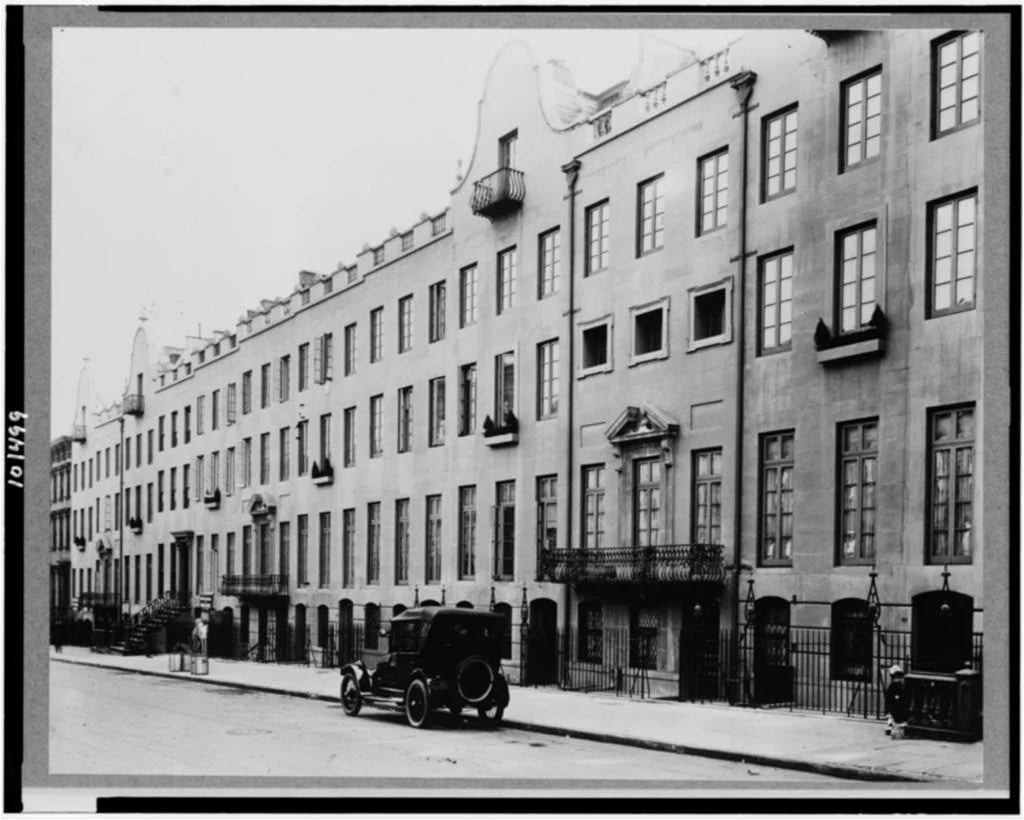
The Secret Oasis of Turtle Bay Gardens
Tucked behind modest townhouses on East 48th and 49th Streets lies Turtle Bay Gardens, one of Manhattan’s most enchanting hidden enclaves. Conceived in 1919 by heiress and philanthropist Charlotte Hunnewell Sorchan, this visionary development transformed twenty decaying 1860s brownstones into an Italianate oasis centered around a shared, willow-shaded esplanade and a fountain inspired by the Villa Medici.
Over the past century, the enclave served as a private sanctuary for cultural and literary icons, including Katharine Hepburn, Stephen Sondheim, E.B. White, Maxwell Perkins, Ruth Gordon, Dorothy Thompson, and Bob Dylan. When post-war commercial development and United Nations construction threatened to demolish the low-rise block, resident activists fought back to save their shared commons. Officially designated a New York City historic district in 1966, Turtle Bay Gardens remains a timeless testament to community preservation and architectural resilience in the heart of Midtown East.
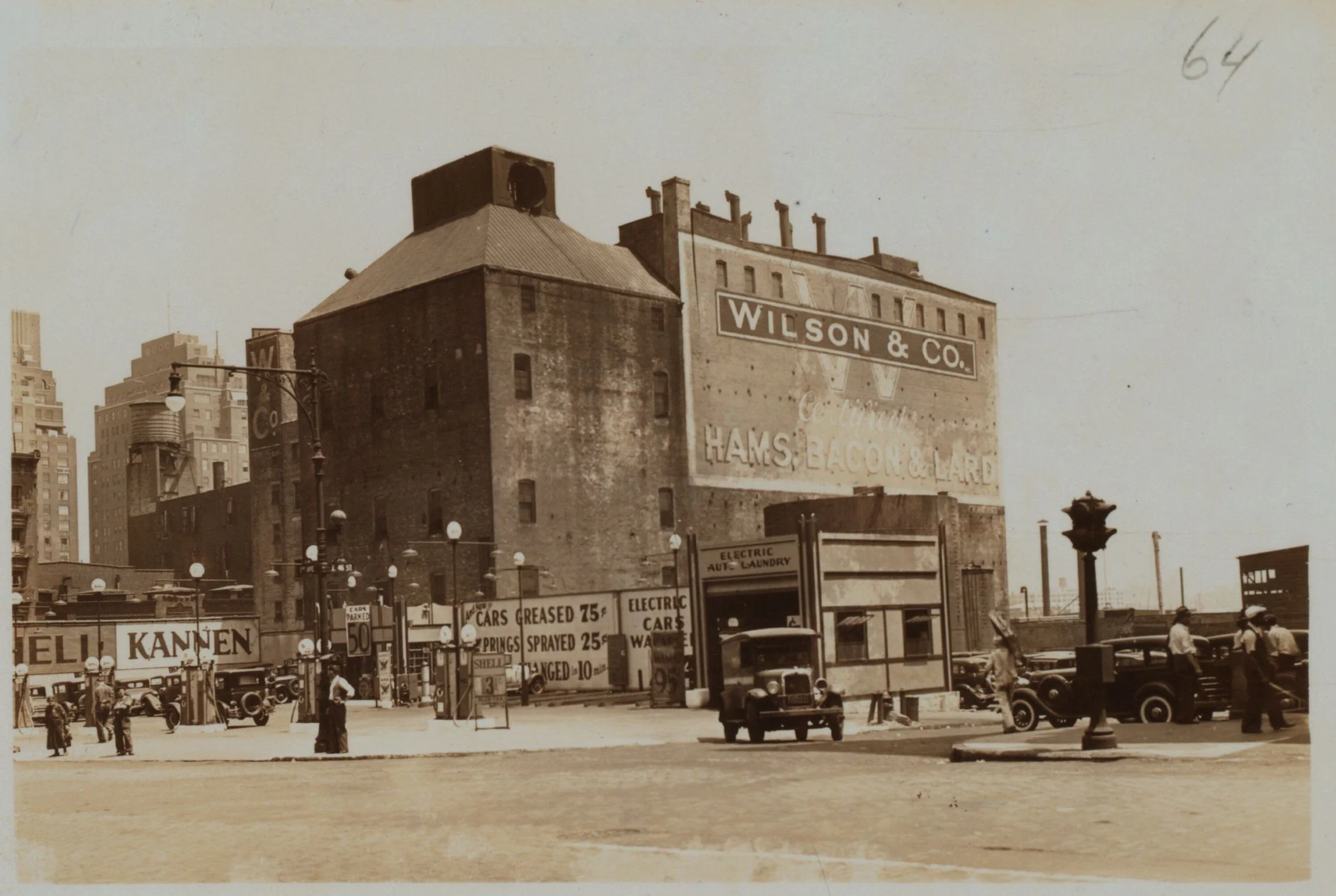
Abattoir Place: When Midtown East’s Waterfront Was Manhattan’s Slaughterhouse Capital
Before the United Nations rose along First Avenue, the East River shoreline between 42nd and 48th Streets was known as "Abattoir Place."
Decades before diplomatic motorcades arrived, this industrial waterfront echoed with bellowing cattle and the stench of rendering vats. Barges delivered live herds to massive multi-story plants run by Swift & Company, where livestock was processed to feed a booming city.
By 1946, developer William Zeckendorf quietly bought up the blighted 17-acre site to build a futuristic metropolis called "X-City." Instead, John D. Rockefeller Jr. purchased the land for $8.5 million and gifted it to the world. Overnight, Midtown East traded pungent stockyards for international diplomacy, completely transforming the Manhattan waterfront.

The Women Who Built Sutton Square: How Gilded Age Rebels Colonized Manhattan’s Waterfront
In 1920, Manhattan’s eastern bluffs along 58th Street were a neglected industrial margin dominated by breweries and tenements. That changed when a coalition of independent, visionary women launched an audacious social experiment. Seeking refuge from rigid Fifth Avenue conventions, Anne Harriman Vanderbilt, transatlantic humanitarian Anne Tracy Morgan, and cultural pioneers Elisabeth Marbury and Elsie de Wolfe colonized the waterfront. Transforming decaying Victorian rowhouses into understated neo-Georgian townhomes, they surrendered rear yard space to create Sutton Square’s shared riverside garden. Through architectural daring and communal resolve, these trailblazing women permanently reshaped New York's residential landscape.

When Midtown East Smelled of Hops: The Forgotten Brewing Barons of Turtle Bay
Long before Midtown East became a corridor of gleaming corporate towers and residential enclaves, it was one of America's most prolific brewing hubs. Fueled by a massive influx of German immigrants, 19th-century operations like F&M Schaefer, Peter Doelger, and the Turtle Bay Brewery turned the East Side into an industrial powerhouse of cold cellars and steam kettles.